Choosing a new hair color feels exciting until you actually sit down and try to pick one. Pinterest boards, Instagram reels, celebrity photos, they all promise the “perfect shade,” but most people who walk into a salon with a saved picture end up disappointed. Not because the color was wrong, but because the picture was never really theirs to begin with.
As a stylist at Studio Styl Co in Palatine, IL, one of the questions I get asked almost every single day is some version of “what color would actually suit me?” Over the years of doing color services, I’ve realized that the answer has very little to do with trends and everything to do with understanding the person in front of you, their hair, their skin, and honestly, their personality.
Not sure where to start? Book a color consultation with us and we’ll help you figure it out in person, with real shade cards in hand.
It Starts With the Hair, Not the Color Chart
Before we even talk about shades, the first thing we look at is the quality and texture of the client’s hair, along with what color (if any) is already on it. This step gets skipped in almost every online guide, but it’s the most important one.
If a client already has colored hair, we walk them through the exact scenario, what’s currently on their strands, how it will react to a new color, and what’s realistic to achieve without damaging the hair. Color doesn’t sit on already-colored hair the same way it sits on virgin hair, so pretending otherwise sets people up for disappointment.
If the hair is virgin (never colored before), that’s when we really get to have fun. This is where we can suggest a color based on the client’s skin tone and, just as importantly, their personality. Because at the end of the day, whatever the client wants matters most, our job is to guide that choice, not override it.
Why Personality Matters as Much as Skin Tone
This might be the part that surprises people the most: hair color isn’t just a “does it match my skin” decision. A full color change genuinely changes how someone comes across; their personality, their presence, the way they feel walking into a room.
That’s why we don’t just hand someone a shade based on a formula. We look at how someone carries themselves, what kind of look they’re going for, and then match that with what will actually work with their undertone. The goal is always a result that feels satisfying and true to them, not just technically “correct” on paper.
A General Guide: Hair Color by Skin Tone and Undertone
While we always recommend an in-person consultation over self-diagnosing, it helps to understand the basics of how undertones work before you come in. Here’s a general breakdown of what tends to work well for each undertone.
How to Find Your Undertone
A simple way to check is to look at the veins on the inside of your wrist in natural light. If they look blue or purple, you likely have a cool undertone. If they look green, you likely have a warm undertone. If you genuinely can’t tell, or your veins look like a mix of both, you likely have a neutral undertone. Another quick trick: warm undertones tend to look better in gold jewelry, cool undertones in silver, and neutral undertones usually look good in both.
Warm Undertones
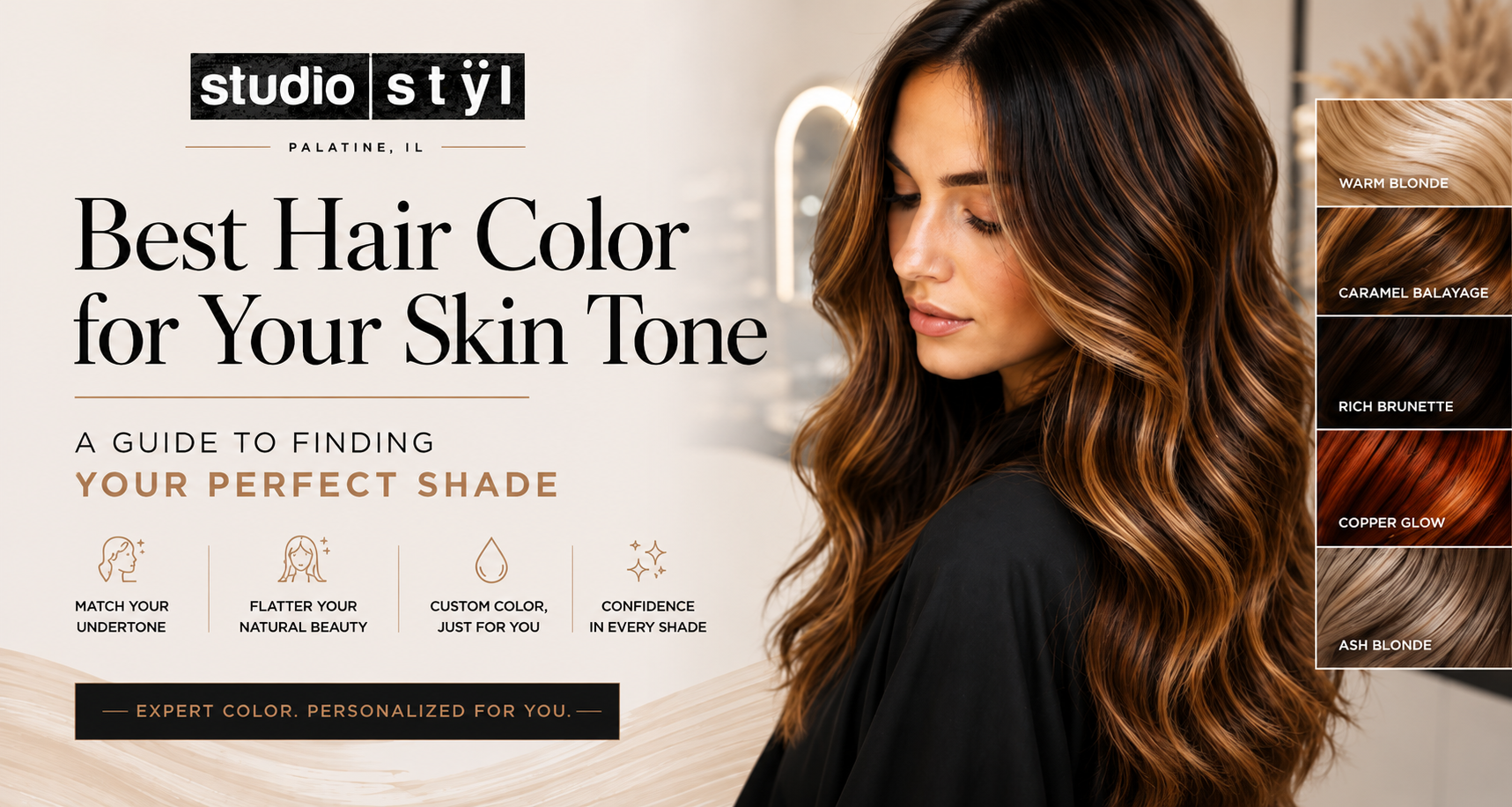
If your skin has golden, peachy, or yellow undertones, shades with warmth built into them tend to look the most natural. Think honey blonde, caramel, golden brown, copper, and warm chestnut. These tones enhance the skin’s natural glow rather than fighting against it. Icy, ash-based colors can sometimes wash out warm skin, so if you want to go lighter, warmth is usually the safer direction.
Cool Undertones
If your skin leans pink, red, or blue, cooler-toned hair color families tend to balance it out. Ash blonde, cool beige blonde, mocha brown, and cool dark chocolate are common flattering choices, since they offset the pink or red in the complexion rather than intensifying it.
Neutral Undertones
If you’re genuinely a mix of both, or can’t quite tell either way, you’re in a fortunate position, neutral undertones generally have the flexibility to pull off a wider range of colors than warm or cool skin, from richer browns to soft blondes to select reds.
Olive Undertones
Olive skin is its own category and tends to confuse people the most, because it can lean warm, cool, or neutral depending on the person. Olive skin generally has yellow, green, or golden undertones underneath the surface. As a general rule, warm browns, honey, caramel, and auburn tend to look more luminous on olive skin, while very icy platinum or flat ash tones can sometimes make olive skin look dull rather than radiant.
This is exactly the kind of nuance a photo from the internet can’t tell you, and exactly why we always bring it back to an in-person consultation rather than a chart or a filter.
Matching Shades and Techniques to Every Skin Tone
Here’s the part most guides oversimplify: they’ll tell you “warm skin tones wear warm colors” and leave it at that. In reality, every single person has a different color tone, and there’s no one-size-fits-all shade for “warm” or “cool” skin. It’s far more nuanced than that, which is exactly why we recommend an in-person or in-salon consultation rather than trying to self-diagnose from an app filter.
What we can tell you is which techniques give us the flexibility to tailor color to each individual, rather than forcing everyone into the same three or four “recommended” shades. Depending on what someone’s skin tone calls for, we might reach for:
- Balayage
- Partial Balayage
- Full Highlight or Full Highlight Color
- Partial Highlight or Partial Highlight Color
- Bleach touch-ups
- Full or Partial Color
The technique matters just as much as the shade itself. Balayage, for example, gives a softer, more natural gradient that can be adjusted to warm up or cool down someone’s overall look, while a full color service gives a more uniform, bold result. Choosing between them isn’t about what’s trending, it’s about what will actually complement the individual sitting in the chair.
Curious which technique fits your hair and skin tone? See our full range of hair services and book a consultation with one of our Palatine colorists.
The Biggest Mistake People Make When Choosing Color on Their Own
If there’s one thing I want every reader to walk away with, it’s this: stop trusting photos as your reference point.
Pictures, especially the ones circulating on social media, go through so much editing and lighting manipulation that the color you’re seeing on screen is rarely the color that would actually show up on someone’s head in real life. A shade that looks cool and ashy in a photo might have been shot in cool lighting, edited with a filter, or simply doesn’t translate onto a different hair texture or skin tone.
Instead of picking a color off a screen, we always suggest looking at an actual shade card in person and choosing from there. A shade card doesn’t lie the way a filtered photo can. From there, we suggest a color that’s going to enhance the individual’s personality and appearance, rather than chasing a look that works for someone else’s skin, lighting, and camera settings.
If you’re someone who feels nervous about committing to a color change, this is exactly why a consultation matters so much. Color is our specialty, and our priority is making sure you leave fully satisfied, not just with a trendy color, but with a shade that was actually chosen for you.
How Long Does a Color Service Actually Take?
This is practical information that’s genuinely useful to know before you book:
- A full color service typically takes 3 to 4 hours, depending on the length and volume of your hair.
- A root touch-up alone usually takes 45 minutes to an hour.
Longer or thicker hair naturally takes more time to process evenly, so if you’re planning your day around an appointment, it’s worth factoring this in.
Making Your Color Last
Getting the color right in the chair is only half the job, the other half is how you take care of it afterward. We always recommend using the shampoo, conditioner, and serum recommended for your specific color brand. This isn’t just an upsell; using the right aftercare products genuinely helps the color sustain its result for a much longer time than using random or generic products.
Since color, skin, and overall glow tend to go hand in hand, pairing your new shade with a good facial treatment or skin care service can round out the whole look – something our Palatine clients often add on around a color appointment.
Ready for a Shade That’s Actually Made for You?
Choosing a hair color isn’t about copying a photo or following a trend, it’s about understanding your hair’s history, your skin’s undertone, and the version of yourself you’re trying to bring out. That’s exactly the kind of personalized attention we bring to every color consultation at Studio Styl Co.
If you’re in Palatine, IL and thinking about a color change, whether it’s your first time going virgin-to-color or you’re looking to refresh an existing shade, come see us for a real, in-person shade consultation. We’ll walk you through your options honestly, show you real shade cards instead of filtered photos, and help you land on a color that actually suits you, not just your screen.
Book Your Color Consultation Today
Frequently Asked Questions
How do I know if a hair color will actually suit my skin tone?
The most reliable way is an in-person consultation with a shade card, not a photo from social media. Every person has a different color tone, so what works for someone else’s skin, lighting, and camera won’t necessarily translate to your hair. A stylist can look at your skin’s undertone alongside your hair’s current condition and guide you toward a shade that genuinely complements you.
How can I tell if my undertone is warm, cool, or neutral?
A quick way to check at home is to look at your wrist veins in natural light — blue or purple usually means cool, green usually means warm, and a mix or unclear reading usually means neutral. It’s a helpful starting point, but an in-salon consultation gives a far more accurate read, especially for olive skin tones, which can genuinely fall into any of the three categories.
Can I still get a specific color if my hair is already colored?
Yes, but the approach will be different from someone with virgin hair. We look at exactly what’s currently on your hair first, then explain the realistic scenario for how a new color will take, including any steps needed to get you there safely without unnecessary damage.
What’s the difference between highlights, balayage, and full color?
They all achieve different levels of contrast and maintenance. Full color gives an even, uniform result throughout. Balayage and partial balayage create a softer, hand-painted gradient that grows out more naturally. Full and partial highlights add dimension through sections of lightened hair. The right choice depends on your skin tone, your hair’s condition, and the overall look you’re going for.
Why shouldn’t I just bring in a photo of the color I want?
Photos, especially from social media, are almost always affected by editing and lighting. A shade that looks perfect on screen may look completely different once it’s actually processed on your hair under natural light. We always recommend choosing from an actual shade card in person instead, so what you see is what you’ll really get.
How long does a hair coloring appointment take?
A full color service typically takes 3 to 4 hours depending on the length and volume of your hair. A root touch-up alone usually takes 45 minutes to an hour.
How often should I come back for a touch-up?
This depends on how fast your roots grow and how much contrast you’re comfortable seeing, but root touch-ups are generally quicker sessions than a full color service, making them easy to fit in regularly to keep your color looking fresh.
What should I do at home to make my color last longer?
Use the shampoo, conditioner, and serum recommended for your specific color brand rather than generic products. The right aftercare products help the color hold its result for significantly longer than it would otherwise.
I’m nervous about committing to a color change. What should I do?
That’s completely normal, and it’s exactly why a consultation matters. Come in, look at real shade cards, and talk through your hair’s history and your goals with a stylist before committing to anything. Color is our specialty, and the goal is always to make sure you leave fully satisfied with a shade chosen specifically for you.
Where can I get a professional hair color consultation in Palatine, IL?
Studio Styl Co offers in-person color consultations in Palatine, using real shade cards matched to your skin tone, undertone, and hair condition. Book your consultation here or explore our full list of hair services to see what’s included.